Guide
Best Cleansers for Sensitive Skin
The best cleanser for sensitive skin removes what needs removing while creating as little unnecessary friction as possible, with a comfortable formula and routine fit.
Quick Answer
Choose a cleanser with a clear purpose, a comfortable after-feel, and enough cleansing power for your actual sunscreen, makeup, oil, and buildup. Reduce friction before adding more products.
When skin is sensitive, shopping for cleanser can feel like trying to avoid an invisible trap. A product may be described as refreshing or deep-cleaning, but your face may respond with stinging, tightness, flushing, or roughness.
The best cleanser for sensitive skin is not the one with the most impressive claims. It is the one that removes what needs removing while creating as little unnecessary friction as possible.
Key Takeaways
- Choose a cleanser that removes what you need removed without creating tightness or stinging.
- A simple, fragrance-free formula may be a useful starting point when your skin reacts easily.
- Match the method to your actual sunscreen, makeup, oil, and daily buildup.
- Lukewarm water, short contact time, and gentle fingertips matter as much as the bottle.
- Persistent burning, swelling, severe itching, or worsening redness needs professional attention.
Choose This Approach If...
- Your skin reacts to otherwise ordinary cleansing products
- You are comparing gel, cream, balm, and foam formats
- You want to reduce irritation before adding new treatments
The short answer: reduce irritation first
Look for a cleanser with a simple purpose, a texture you can use gently, and a finish that does not leave your skin uncomfortable. Fragrance-free formulas are often worth considering when your skin reacts easily, but “sensitive skin” on the label is not a guarantee.
Your cleanser should fit what you need to remove. If you wear heavy sunscreen or makeup, choose a method that can remove it without repeated scrubbing. If you do not, a simpler cleanser may be enough.
What makes a cleanser a reasonable starting point?
A short, clear ingredient list
Simple does not mean every ingredient is automatically safe, but fewer unnecessary extras can make a product easier to evaluate. Fragrance and essential oils may be worth avoiding if you already know they trigger discomfort.
A comfortable after-feel
Do not judge a cleanser only by how it feels while you massage it in. Pay attention to the next few minutes. Burning, tightness, heat, or unusual roughness are reasons to reconsider the product or the way you are using it.
Enough cleansing power for the actual task
A cleanser that cannot remove what you need removed may lead to repeated washing. A cleanser that is far stronger than the task requires may create unnecessary dryness. Match the method to your sunscreen, makeup, oil, and daily buildup.
Gel, cream, balm, or foam?
Cream and lotion cleansers
These may be comfortable when your skin is easily irritated or dry. They can be useful for a straightforward morning or evening cleanse, especially when you are not removing heavy makeup.

Gel cleansers
A gel can work well if it rinses clean without leaving your skin tight. The format alone does not determine whether it is gentle; the formula and your skin’s response matter more.
Balms and oils
These can help dissolve makeup or sunscreen and may reduce the need for rubbing. Follow the directions, rinse carefully, and decide whether you need a second gentle cleanse.
Foaming cleansers
Foam is not automatically harsh, but a strong “squeaky” after-feel is not a useful target. If a foaming cleanser leaves your skin tight or stinging, try a milder format or shorten the contact time.
How to choose for different sensitive-skin situations
If your skin is sensitive and dry, prioritize a gentle cleanser and a comfortable moisturizer rather than increasing cleansing strength. If your skin is sensitive and oily, choose a cleanser that removes excess oil without trying to make the skin feel completely stripped.
If you are prone to flushing or stinging, reduce the number of products you are testing at once. A new cleanser, serum, exfoliant, and sunscreen introduced together creates too many variables.
The American Academy of Dermatology recommends gentle skin-care practices for sensitive or dry-feeling skin. Review its dry-skin care guidance.
The technique can make a good cleanser feel bad
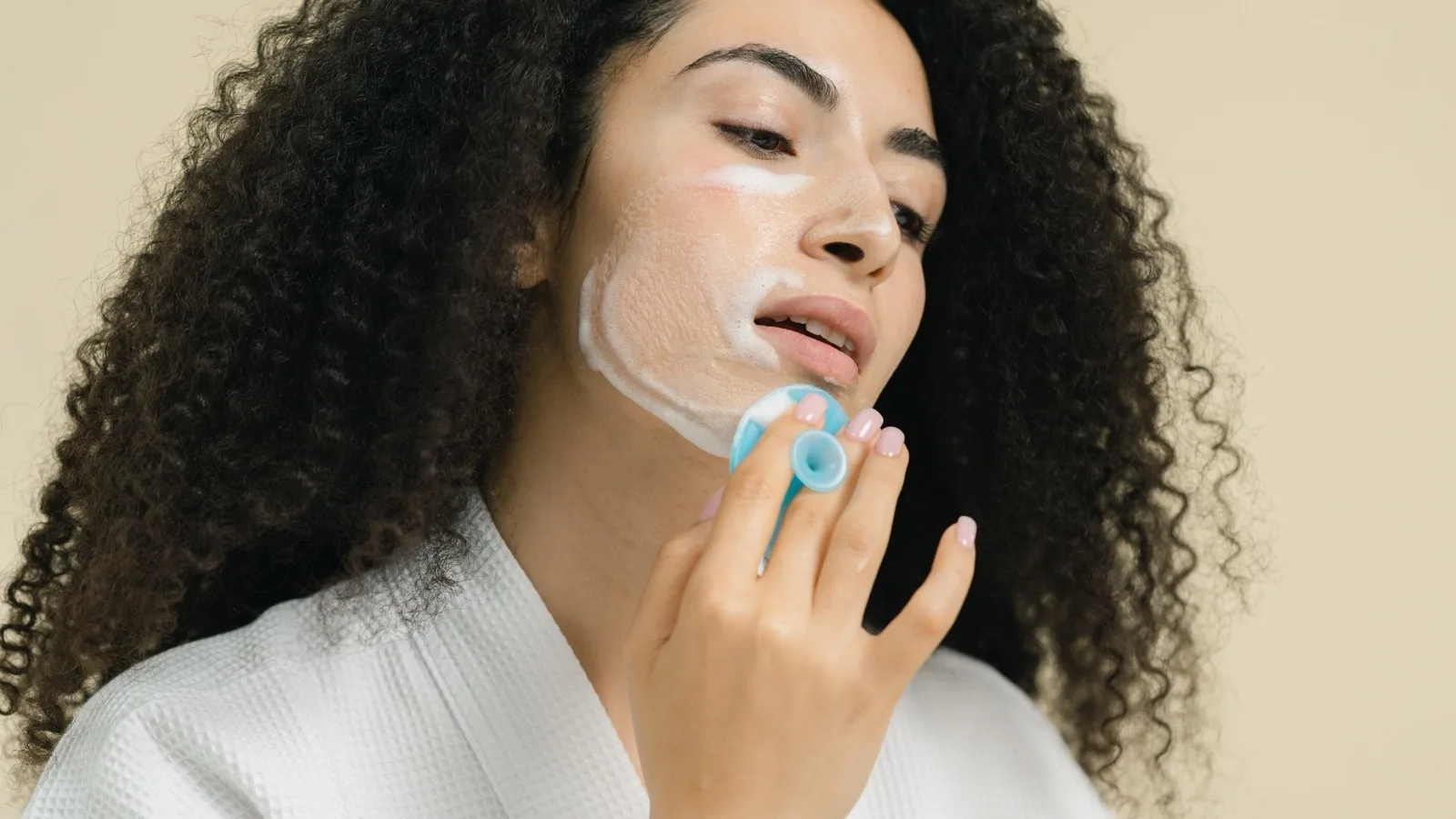
Use lukewarm water and your fingertips. Keep washing brief, rinse thoroughly, and pat the skin dry. Do not use a rough cloth, cleansing brush, or repeated passes to remove flakes.
You may not need a full cleanse both morning and night. Some people with sensitive skin prefer a more complete evening cleanse and a morning rinse. The right choice is the one that leaves your skin calm and ready for moisturizer.
Common claims to question
“Deep cleansing”
The phrase may suggest a product is stronger, but strong is not automatically better for sensitive skin. Ask what you need removed and whether the product can do that without discomfort.
“Natural” or botanical
Plant-derived ingredients can still irritate. Judge the entire formula and your own history rather than assuming natural means gentle.
“Hypoallergenic”
This label is not a guarantee that a product will suit every person. Patch-test cautiously and stop if your skin reacts.
A simple buying checklist
Before buying, ask:
- Is the product intended for the amount of sunscreen, makeup, or oil I need to remove?
- Can I use it without scrubbing or washing for a long time?
- Does the formula avoid ingredients I already know I do not tolerate?
- Will I be able to keep the rest of my routine stable while testing it?
Start with one cleanser and give yourself enough time to observe the result. If it stings every time, stop using it rather than trying to train your skin to tolerate it.
When to simplify or seek help
If your skin is reacting, simplify to gentle cleansing, moisturizer, and daytime protection. Avoid adding exfoliants or strong treatments while you are trying to understand the reaction.
Persistent burning, swelling, severe itching, painful cracking, or worsening redness deserves professional attention. A cleanser cannot resolve every cause of skin discomfort.
Where to go next
For the broader low-irritation routine, read the Sensitive Skin Guide: How to Build a Low-Irritation Routine. For the role of cleansers in a routine, see Skincare Product Categories Explained.
The best cleanser for sensitive skin is the one that does its job quietly: it removes what needs removing, leaves your skin comfortable, and does not add another problem to the routine.