Skin Concerns
Dry Skin vs Dehydrated Skin
Dry skin usually describes a longer-term lack of oil or lipids, while dehydrated skin describes a temporary lack of water; the two can overlap and need different routine clues.
Quick Answer
Dry skin usually describes a longer-term skin type or tendency toward insufficient oil or lipids, while dehydrated skin describes a lack of water that can affect any skin type. Use the distinction to choose between reducing moisture loss and adding hydration, not as a diagnosis.
Dry skin and dehydrated skin can feel almost identical when you are looking in the mirror: tightness, roughness, dullness, or makeup that does not sit comfortably. That overlap is why the terms are so easy to confuse.
The most useful distinction is simple. **Dry skin usually describes a skin type that lacks oil or lipids. Dehydrated skin describes skin that lacks water.** A person can have either one, or both at the same time.
Key Takeaways
- Dry skin is generally discussed as a skin type; dehydrated skin is a temporary state that can affect oily, combination, or other skin types.
- Dryness tends to point toward comfort and support that helps reduce moisture loss, while dehydration points toward adding hydration and supporting the barrier.
- Hot water, harsh cleansing, weather, and irritating products can contribute to dry or dehydrated-feeling skin.
- These signs are clues, not a diagnosis. Persistent, painful, or worsening symptoms deserve professional attention.
Choose This Comparison If...
- Your skin feels tight, rough, dull, or unusually uncomfortable.
- You are unsure whether to focus on hydration, moisturizer, or both.
- You want a practical distinction without treating a skin concern through guesswork.
The short answer: oil versus water
Think of the comparison as two different questions:
| Question | Dry skin | Dehydrated skin |
|---|---|---|
| What is missing? | Natural oils or lipids | Water |
| What does it describe? | Often a recurring skin type | A condition or state that can come and go |
| Can oily skin experience it? | Oily skin is a different skin type | Yes, dehydration can affect oily or combination skin too |
| Common clues | Flaking, roughness, redness, tightness | Dullness, tightness, fine lines, less bounce |
| General routine focus | Comfort and reducing moisture loss | Adding hydration and supporting the skin barrier |
This is an educational framework, not a self-diagnosis. The medically reviewed Healthline comparison makes the same basic distinction while noting that symptoms can overlap.
That distinction is useful because it changes the next question, not because it lets you label your skin from one glance. The American Academy of Dermatology’s dry-skin overview supports treating dry skin as a practical skin-care concern while leaving room for other causes when symptoms persist or become severe.
What dry skin usually means
Dry skin is commonly treated as a skin type, alongside oily, combination, and normal skin. It tends to be a longer-term pattern: your skin may regularly feel rough, tight, flaky, or uncomfortable, especially in cold or dry weather.
Dryness can also become more noticeable when the skin loses water too quickly. The American Academy of Dermatology explains that harsh cleaning products, long hot showers, and cold, dry conditions can contribute to excessively dry skin. That does not prove what is causing an individual person’s symptoms, but it gives you useful routine clues.
Clues that may fit dry skin
- Your skin tends to feel dry across seasons, not only after a recent routine change.
- Flaking or rough texture is a recurring problem.
- Richer creams or ointments feel more comfortable than very light products.
- Your skin becomes more uncomfortable in cold, dry weather.
- Cleansing often leaves your skin feeling tight or stripped.
These clues can overlap with dehydration, irritation, or a skin condition. Treat them as observations to guide your next question, not as proof of a diagnosis.
What dehydrated skin usually means
Dehydrated skin lacks water. Unlike dry skin, this can happen to people with oily, combination, or otherwise non-dry skin types. You might notice that your face looks shiny but still feels tight, or that fine lines look more noticeable than usual.
Clues that may fit dehydration
- Your skin looks dull or tired.
- Fine lines seem more visible when your skin is tight.
- Your skin feels tight after cleansing but becomes shiny later.
- A routine change, over-cleansing, weather shift, or irritating product came before the problem.
- Your skin feels less comfortable even though it does not consistently behave like a dry skin type.
Some sources describe a pinch test as a possible clue, but it is not definitive. Do not use an at-home test to diagnose a skin condition or to replace professional advice.
Appearance-based clues are especially easy to overinterpret. A dull look, a few visible lines, or tightness after cleansing can tell you what to observe, but they cannot reliably identify the underlying cause. Track what changed—such as a cleanser, weather, treatment, or washing frequency—and use that pattern to choose a cautious next step.
Can skin be dry and dehydrated at the same time?

Yes. This is one of the reasons the comparison can become frustrating.
Someone with a naturally dry skin type can also experience dehydration after using a harsh cleanser, spending time in a dry environment, or overusing irritating products. In that case, the routine may need to support both comfort and hydration.
The practical question is not always “Which one am I?” It may be “Which problem is most noticeable right now, and what change is least likely to make it worse?”
How the routine may differ
If dry skin is the main problem
Focus on reducing the feeling of tightness and helping the skin stay comfortable:
- Use a gentle cleanser and avoid washing more aggressively than necessary.
- Choose a moisturizer texture that feels comfortable and lasts beyond the first few minutes.
- Consider richer creams or ointments if lighter lotions are not enough.
- Limit avoidable exposure to very hot water and harsh cleansing products.
- Add new active products cautiously rather than treating flaking with more and more exfoliation.
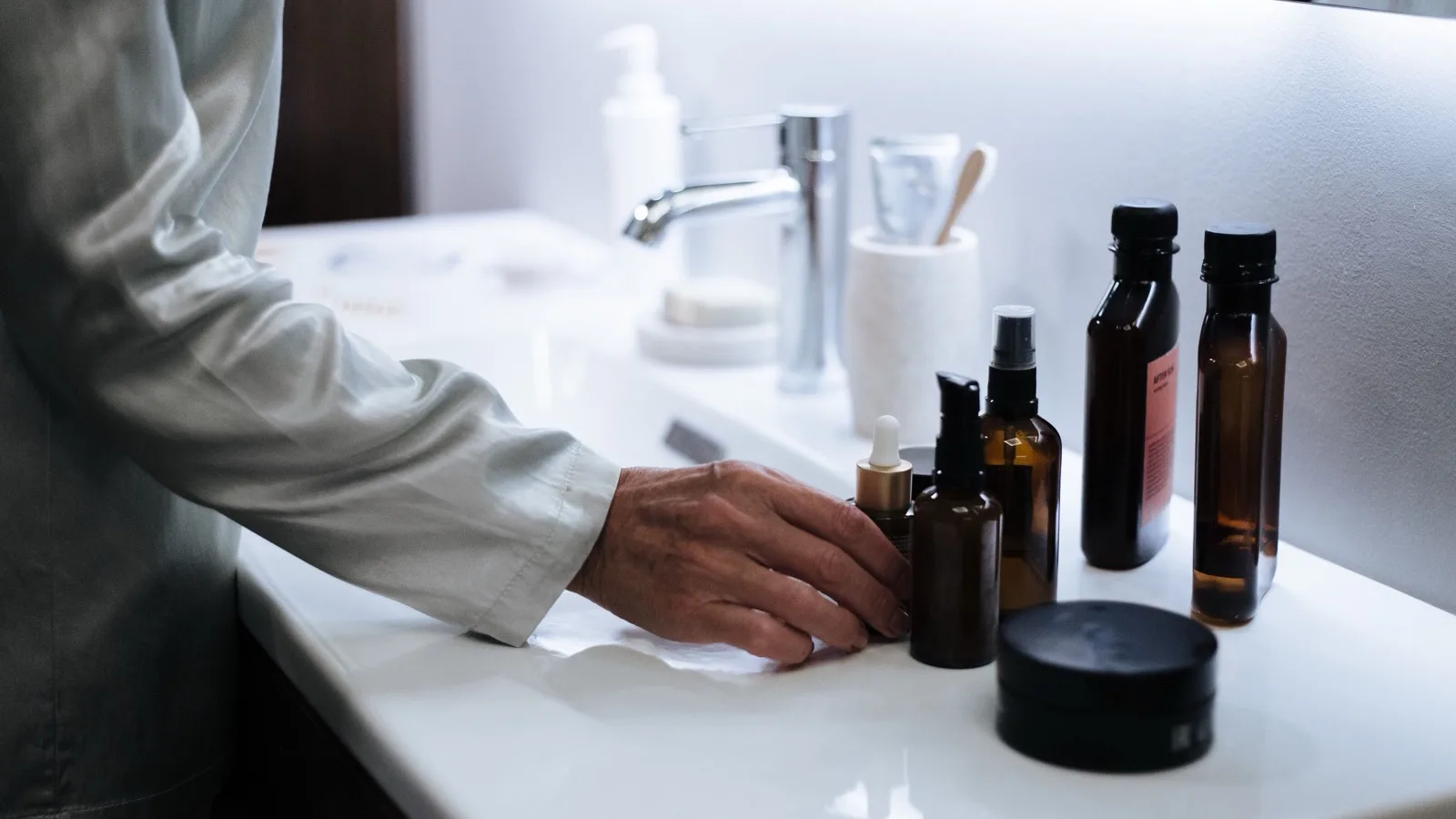
The AAD’s moisturizer guidance emphasizes choosing a texture based on skin type and the severity of dryness. A gel, lotion, cream, and ointment are not interchangeable in how they feel or how much oil they contain.
If dehydration is the main problem
Focus on adding hydration without ignoring the layer that helps keep it from disappearing:
- Use a gentle cleanser and avoid products that leave your skin feeling stripped.
- Try a hydrating product if it addresses a clear need, rather than adding several at once.
- Apply moisturizer in a way that leaves your skin comfortable instead of relying on a watery product alone.
- Reduce or pause irritating products if the change in texture followed overuse of active ingredients.
- Give one routine change time before adding another.
Hydrating a dehydrated-feeling complexion does not mean that every water-based product will suit every person. Formula, tolerance, weather, and the rest of the routine all matter.
Adding a watery product also does not make moisturizer irrelevant. If the skin feels comfortable for only a few minutes after hydration, the more useful experiment may be changing the moisturizer or reducing the source of irritation. Make one change, observe the result, and avoid stacking several new products while you are still trying to understand the pattern.
A simple decision guide
Use this as a starting point rather than a diagnosis.
Dryness may be the better starting explanation if:
- Your skin has usually felt dry, rough, or flaky.
- The problem is worse in cold or low-humidity conditions.
- Your skin consistently prefers richer, more protective textures.
Dehydration may be the better starting explanation if:
- Your skin is oily or combination but suddenly feels tight or dull.
- Fine lines look more noticeable than usual.
- The change followed a new product, over-cleansing, weather change, or another routine disruption.
Both may be involved if:
- Your skin is regularly dry and has recently become tight, dull, or unusually sensitive.
- Moisturizer helps with flaking but does not fully resolve the tight feeling.
- Your skin changes significantly with weather, travel, or routine adjustments.
Common mistakes
Treating every tight feeling as proof of dehydration
Tightness can have several causes. It may reflect dry skin, dehydration, irritation, over-cleansing, or a condition that needs professional evaluation.
Adding water without supporting the skin afterward
A watery serum or mist may feel refreshing, but a routine still needs to suit your skin and help maintain comfort. Do not assume that adding more layers is automatically the answer.
Exfoliating because the skin looks rough
Roughness can tempt you to scrub or add acids. If the skin is already irritated or uncomfortable, more exfoliation may make the situation harder to interpret.
Choosing a product category before understanding the problem
“Hydrating” and “moisturizing” are useful words, but they do not tell you everything about a formula. Start with the problem you are trying to address and how your skin responds.
Assuming one symptom settles the question
No single sign can reliably separate dry skin from dehydrated skin. Look at the pattern over time and consider what changed before the symptoms appeared.
When to get professional advice
If your skin becomes painful, severely itchy, cracked, persistently inflamed, or worse despite simplifying your routine, speak with a dermatologist or another appropriate healthcare professional. The article can help you organize observations, but it cannot diagnose dry skin, dehydration, eczema, dermatitis, or another condition.
The American Academy of Dermatology’s moisturizer guidance can help frame a practical product choice, but persistent symptoms deserve an individual assessment rather than an increasingly complicated routine.
Frequently asked questions
Can oily skin be dehydrated?
Yes. Dehydration refers to water content, so it can affect people with oily or combination skin as well as people with dry skin.
Is dry skin the same as dehydrated skin?
No. Dry skin is generally discussed as a skin type associated with less natural oil, while dehydrated skin refers to a lack of water. They can overlap.
How can I tell which one I have?
Look at the broader pattern rather than one symptom. Recurring flaking and a long-term preference for richer textures may point toward dryness. A sudden tight, dull, or less resilient feeling after a routine or weather change may point toward dehydration. These are clues, not a diagnosis.
Should I use a richer moisturizer or a hydrating product?
That depends on what your skin is experiencing. Dry skin may benefit from a richer texture that helps reduce moisture loss, while dehydrated-feeling skin may benefit from hydration plus a moisturizer that helps maintain comfort. Introduce changes gradually.
Does drinking more water fix dry skin?
Normal hydration is important for general health, but drinking extra water is not a guaranteed solution for every dry or dehydrated-feeling skin concern. Consider the topical routine, environment, and symptoms together.
Where to go next
If you want to understand the larger context, continue with:
- Dry Skin Guide: Causes, Routine, and Product Choices
- Skincare Product Categories Explained
- Which Skincare Products Do You Actually Need?
- Skin Concerns Guide: How to Match Products to Your Skin Problem
- How to Tell What Your Skin Is Trying to Tell You
Dry skin and dehydrated skin are related, but they are not interchangeable terms. Start with the pattern you are actually noticing, make one sensible change at a time, and get professional guidance when the problem persists or becomes severe.