Guide
Skincare Guide: How to Build a Routine That Actually Fits Your Skin
Build a skincare routine from cleanser, moisturizer, and sunscreen, then add targeted products only when they solve a clear need you can describe.
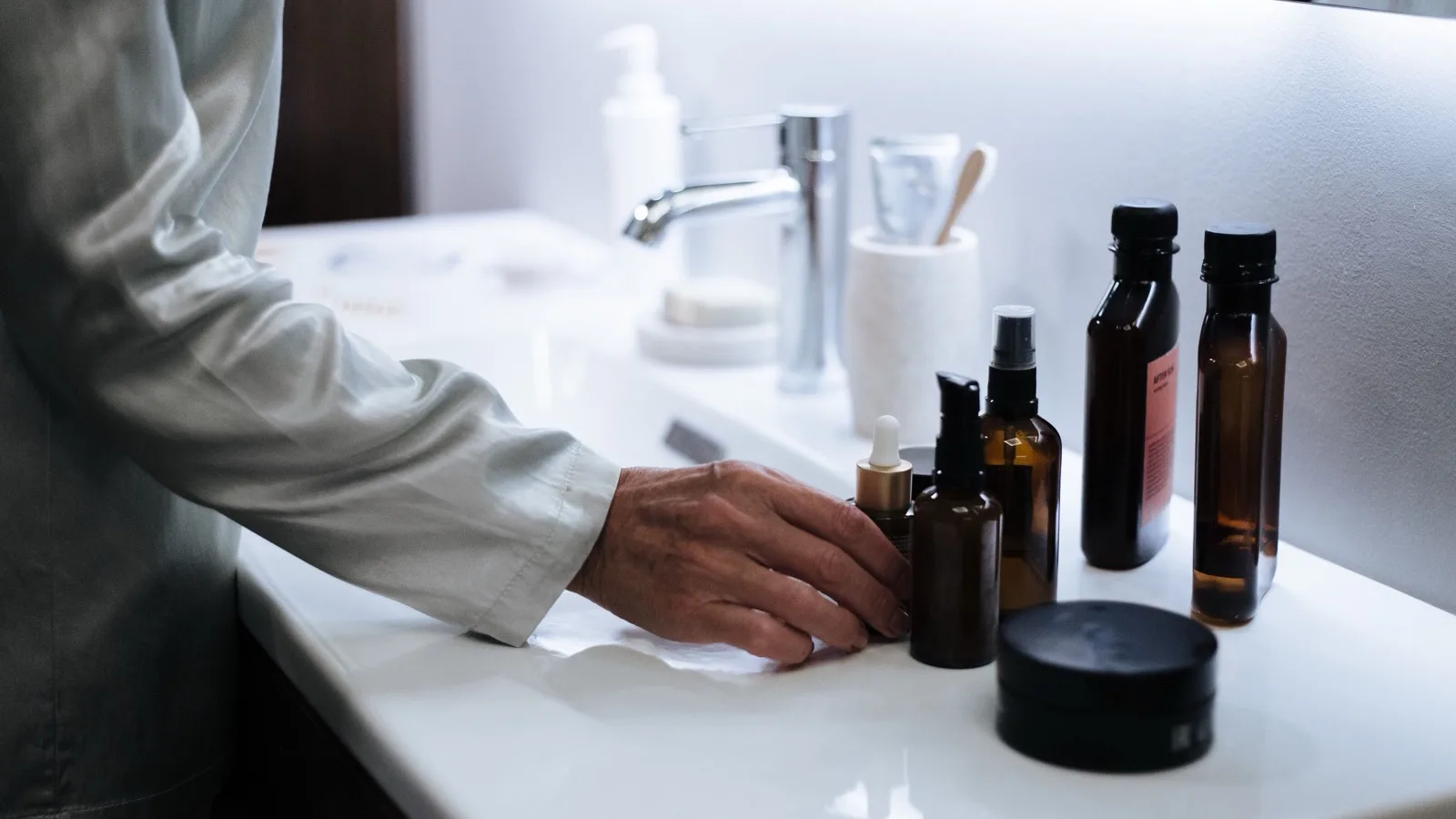
Quick Answer
Build around three essentials—cleanser, moisturizer, and sunscreen—then add serums or exfoliants only for a specific goal such as hydration, oil control, dark spots, or texture.
Skincare gets overwhelming fast when every product sounds essential, but most routines work better when the basics are clear.
This article gives readers a simple way to build a routine around their actual skin needs instead of trends, product overload, or someone else's shelf.
Key Takeaways
- A useful skincare routine is built around your skin and your main goal, not someone else’s product lineup.
- Cleanser, moisturizer, and daytime sunscreen provide the basic foundation for most routines.
- Add serums, exfoliants, or other products only when they perform a clear job that your current routine does not already cover.
- Trying to address several concerns at once can make a routine harder to follow and harder to evaluate.
- A simple routine that you can use consistently is generally more useful than a longer routine that does not fit your needs, habits, or tolerance.
Choose This Approach If...
- You are building your first skincare routine
- You feel overwhelmed by too many product categories
- You want a simple framework before buying anything new
Why Your Routine Matters More Than the Number of Products
Most people don’t struggle because they have “bad skin.” They struggle because they don’t know which decisions matter.
Should you buy a serum before a moisturizer?
Do expensive products actually make a difference?
Is a ten-step routine better than a three-step routine?
These questions all come back to the same misunderstanding: people often think skincare is about collecting products when it’s really about solving specific problems.
A routine gives each product a job.
Instead of asking, “What’s the best skincare product?” you start asking much more useful questions:
- What is my skin trying to tell me?
- What problem am I actually trying to solve?
- Which product category helps with that problem?
- Do I even need another product?
Those questions usually lead to better results—and often fewer purchases.
The American Academy of Dermatology’s basic skin-care guidance supports this foundation-first approach. A routine does not become more effective simply because it contains more categories; it becomes more useful when the products are tolerated, appropriate to the goal, and easy to use consistently.
Start With Your Skin, Not Someone Else’s Routine
One of the biggest mistakes beginners make is copying someone else’s routine.
A creator on YouTube may have oily skin.
A friend may be dealing with acne.
Someone on TikTok might simply enjoy trying new products.
None of those routines automatically fit your skin.
Instead, begin with what you notice.
Ask yourself:
- Does your skin often feel tight after washing?
- Does it become shiny within a few hours?
- Do certain products sting or burn?
- Are you mainly trying to prevent aging?
- Are dark spots bothering you more than breakouts?
Your answers matter far more than whatever happens to be trending this month.
Good skincare starts with observation before shopping.
Also consider constraints that product lists tend to ignore: your budget, the time you actually have, the climate you live in, and whether your skin tolerates fragrance or active ingredients. A routine that looks ideal on paper but is too expensive, irritating, or time-consuming is not a good routine for you.
A Simple Decision Framework
Rather than thinking about products first, think about decisions.
Step 1: Identify your main goal
Choose the one issue that matters most right now.
For example:
- keeping skin hydrated
- reducing excess oil
- improving skin texture
- fading dark spots
- reducing redness
- maintaining healthy skin
Trying to solve five problems at once usually makes routines more confusing than effective.
Step 2: Build around the essentials

Almost every routine starts with three basic functions:
Cleanse
Remove sunscreen, oil, dirt and makeup without leaving skin feeling stripped.
Moisturize
Help support the skin barrier and reduce moisture loss.
Protect
Use sunscreen during the day to reduce UV damage.
Those three steps form the foundation.
Everything else builds on top of them.
Think of the essentials as functions rather than mandatory brands or textures:
| Function | Basic question | Optional expansion |
|---|---|---|
| Cleanse | What needs to be removed? | A second cleansing step only when it has a clear job |
| Moisturize | What keeps the skin comfortable? | A richer or lighter texture based on your response |
| Protect | How will I handle daytime exposure? | Reapplication, shade, hats, or clothing as appropriate |
This keeps the routine adaptable without losing its structure.
Step 3: Add products only when they have a purpose
This is where many routines become unnecessarily complicated.
A serum isn’t automatically “better” than a moisturizer.
A toner isn’t mandatory.
An exfoliant isn’t something everyone needs every day.
Every additional product should answer one question:
What job is this product doing that my current routine isn’t?
If you can’t answer that, you probably don’t need it yet.
Understanding the Main Product Categories
You don’t need to memorize dozens of ingredients immediately.
It’s usually more helpful to understand what each product category is designed to do.
Cleansers
Cleansers remove sweat, sunscreen, makeup and daily buildup.
The goal isn’t to make skin feel squeaky clean. It’s to clean without damaging the skin barrier.
Moisturizers
Moisturizers help reduce water loss and support the skin barrier.
Different formulas work better for different skin types, but the purpose remains the same: keeping skin comfortable and healthy.
Serums
Serums are more targeted.
They’re often chosen to address specific concerns like hydration, pigmentation, fine lines or uneven texture.
Think of them as specialists rather than routine essentials.
Sunscreen
If there is one product that benefits almost every daytime routine, it’s sunscreen.
Many skincare goals—preventing dark spots, maintaining even tone and supporting healthy aging—become much harder without daily sun protection.
Exfoliants
Exfoliants remove dead skin cells to improve texture and appearance.
Used appropriately, they can be useful.
Used too often, they can create irritation instead of improvement.
If a new product causes burning, swelling, or a clear reaction, stop using it instead of adding another product to counter it. The American Academy of Dermatology recommends testing new skin-care products cautiously, and its guidance is a useful reminder that “fits my skin” includes tolerance, not just the concern written on the label.
You Don’t Need a Long Routine
Long routines can be enjoyable if skincare is your hobby.
They are not a requirement for healthy skin.
For many people, a routine like this is enough:
Morning
- Gentle cleanser (if needed)
- Moisturizer
- Sunscreen
Evening
- Cleanser
- Moisturizer
Only after those basics feel consistent does it make sense to introduce additional products.
Consistency almost always matters more than complexity.
The same principle applies to cost. The AAD’s skin-care budget guidance supports prioritizing the products that address your most important needs before spending on optional categories. You can build a useful routine without buying every product at once.
Common Misunderstandings
“Expensive means better.”
Not necessarily.
A product should earn its place because it solves a problem—not because of its price.
“More products mean better results.”
Sometimes the opposite is true.
Adding multiple new products at once makes it difficult to know what’s helping and what’s causing irritation.
“Everyone needs the same routine.”
Different skin types, climates, ages and concerns all influence which products make sense.
A routine should fit the person using it.
How to Build Your Routine Over Time
If you’re starting from scratch, don’t try to build the “perfect” routine in one shopping trip.
Instead:
- Learn what your skin is telling you.
- Start with cleanser, moisturizer and sunscreen.
- Use them consistently for several weeks.
- Decide whether one specific concern still needs attention.
- Add only one new product at a time.

This approach keeps skincare simple and makes it much easier to understand what’s actually working.
If the routine is not helping, review the sequence before expanding it. Ask which product was added most recently, whether the original problem is still the main problem, and whether the product is being used as directed. Persistent, painful, or worsening symptoms need professional evaluation rather than an ever-longer routine.
Where to Go Next
Now that you understand how skincare routines are built, the next step is choosing the products that fit your own situation.
You might find these guides helpful:
- Skincare Routines and Segments: How to Choose a Path That Fits You if you’re deciding which type of routine makes the most sense for your goals.