Best of
Best Moisturizers for Rosacea-Prone Skin
Choose a moisturizer for rosacea-prone skin by comfort, texture, fragrance-free selection, tolerance, and fit with a simple routine.
Quick Answer
Start with a simple fragrance-free formula and a comfortable texture, introduce it while keeping the rest of the routine stable, and stop if it causes persistent burning, swelling, hives, or worsening redness.
Choosing a moisturizer for rosacea-prone skin can feel harder than it should.
The more useful question is not which brand is best, but what texture and formula you can use consistently without adding another source of irritation.
Key Takeaways
- Choose a comfortable, fragrance-free formula before chasing dramatic claims.
- Creams, lotions, and gel-creams can each make sense for different skin needs and preferences.
- Introduce one moisturizer at a time and test it before applying it broadly to the face.
- Moisturizer can support comfort and routine consistency, but it does not diagnose or treat rosacea by itself.
Choose This Approach If...
- You are comparing moisturizers for redness-prone skin
- You need a texture that supports consistent use
- You want to reduce unnecessary fragrance, friction, or active ingredients
The short answer: choose comfort before claims
Start with a moisturizer that is simple, fragrance-free, and comfortable when applied. Choose the texture according to your skin’s current needs: a cream may suit dryness, while a lighter lotion or gel-cream may feel easier if richer products are uncomfortable or leave you feeling congested.
Moisturizer is not an optional extra for everyone with rosacea-prone skin. The American Academy of Dermatology recommends moisturizer for people with rosacea whether their skin is dry or oily. The National Rosacea Society also describes moisturizer as an important part of reducing sensations such as burning, stinging, itching, and irritation. These recommendations do not mean that one product works for everybody. They mean that finding a tolerable moisturizer can make a gentle routine easier to maintain.
What makes a moisturizer a good candidate?
Look for a formula you can tolerate
No single ingredient determines whether a moisturizer is right for rosacea-prone skin. The full formula, the amount you apply, the rest of your routine, and your own sensitivity all matter. As a starting point, look for:
- fragrance-free labeling rather than simply “unscented”;
- a short enough ingredient list that you can identify what you are testing;
- a texture that spreads without vigorous rubbing;
- a finish that leaves the skin comfortable rather than hot, tight, or sticky;
- non-comedogenic labeling if clogged pores are also a concern.
Fragrance-free is a useful filter, not a guarantee. A product without fragrance can still sting, and a product that feels fine for one person may not suit another. The goal is to reduce avoidable variables while you test.
Understand the role of common ingredient groups
Moisturizers often combine three broad types of ingredients:
- Humectants help attract and hold water near the skin surface.
- Emollients help soften and smooth the feel of dry or rough skin.
- Occlusives help reduce water loss by forming a protective layer.
These categories explain what a formula may be trying to do, but they are not a ranking system. A rich occlusive cream can be helpful for tight, dry skin and unpleasant for someone who dislikes a heavy finish. A lightweight lotion can be easier to use consistently but may not feel sufficient in cold or dry weather. Choose by the result you can live with, not by the longest ingredient list.
Choose the texture by your situation
| If your skin feels or behaves like this | A reasonable place to start | What to watch for |
|---|---|---|
| Dry, tight, or flaky | Cream or balm-like moisturizer | Heat, heaviness, or discomfort under sunscreen |
| Combination or mildly dry | Lotion or medium-weight cream | Tightness returning soon after application |
| Easily congested or uncomfortable with rich products | Lightweight lotion or gel-cream | Stinging, pilling, or needing to rub repeatedly |
| Irritated after several routine changes | The simplest tolerated moisturizer | Trying several new products at once |
This is a decision guide, not a set of rules. Skin can need a richer texture in winter and a lighter one in humid weather. The best moisturizer is the one that supports a stable routine across the conditions you actually live in.
What to be cautious about
The AAD lists alcohol, camphor, fragrance, glycolic acid, lactic acid, menthol, sodium lauryl sulfate, and urea among ingredients that may irritate rosacea-prone skin. This is a reason to inspect labels carefully, not a reason to assume that every person must avoid every listed ingredient forever. Personal tolerance and product concentration still matter.
Be especially cautious when a moisturizer is also marketed as a strong treatment product. A moisturizer with an active ingredient may be appropriate for a particular purpose, but combining it with exfoliating acids, retinoids, scrubs, or several new products can make a reaction difficult to interpret. A basic moisturizer is often a better baseline while you are trying to understand what your skin tolerates.
Also be skeptical of promises that a moisturizer will eliminate rosacea, stop all flushing, or replace professional treatment. A moisturizer can support comfort and the skin barrier; it does not diagnose rosacea or guarantee that redness, bumps, or flushing will disappear.
How to test a moisturizer
Introduce one new moisturizer while keeping the rest of the routine as stable as possible. The National Rosacea Society recommends testing new products on a peripheral patch of skin before using them on the face. That approach cannot predict every facial reaction, but it can help you avoid applying a questionable product over your entire face immediately.
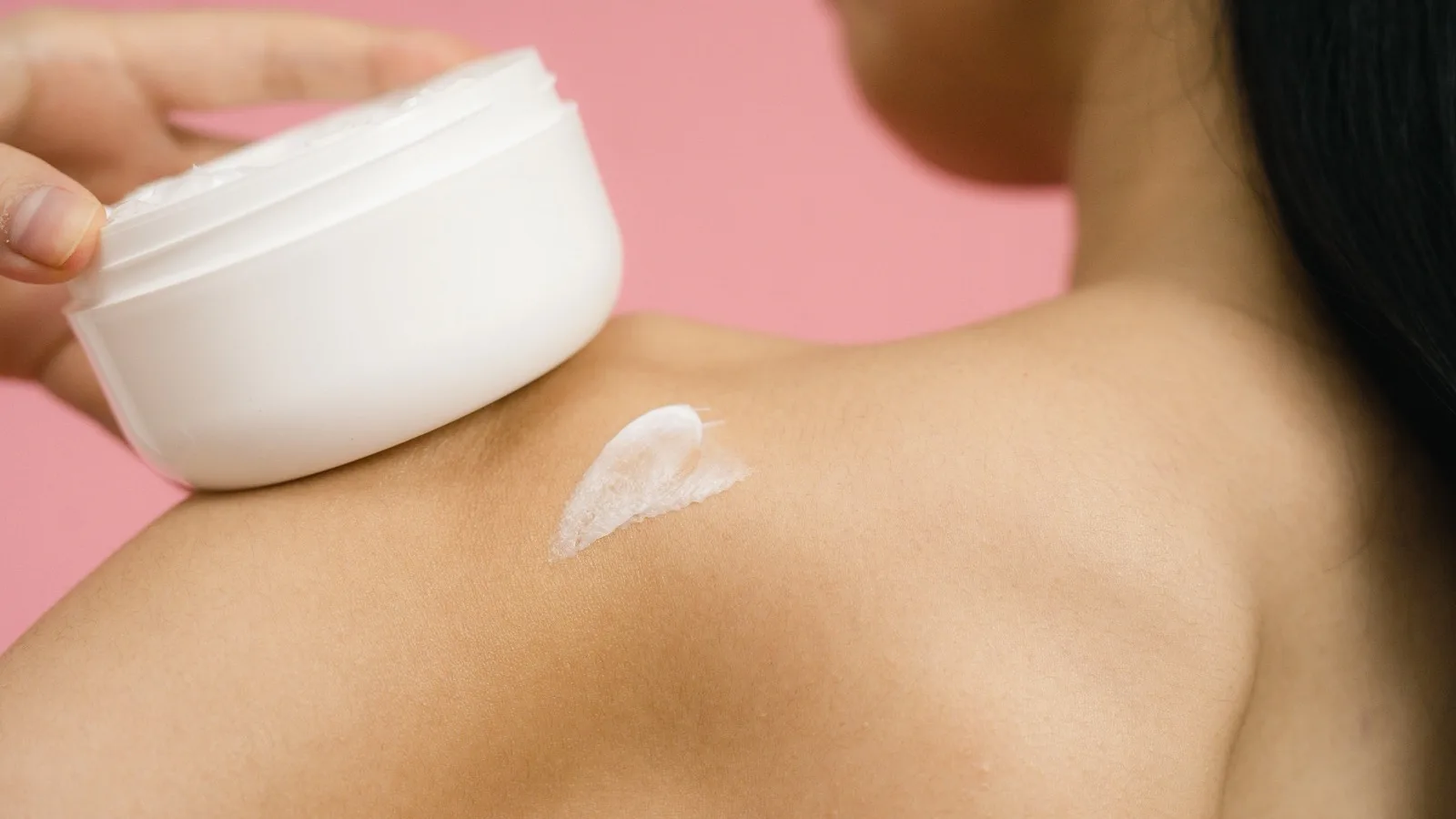
Use a small amount and apply it without rubbing aggressively. Note the immediate sensation, how your skin feels later that day, and whether the next application produces the same response. A brief unfamiliar feeling is different from repeated burning, swelling, hives, or clearly worsening redness.
If a product causes persistent discomfort, stop using it. Keep the container or take a photograph of the ingredient list so you can compare it with future products. A short product diary can be more useful than trying to remember which of several new products caused a problem.
When should moisturizer go in the routine?
For a basic routine, moisturizer usually follows gentle cleansing and comes before sunscreen in the morning. If you use a prescribed topical medication, follow the instructions from your clinician or pharmacist. The National Rosacea Society’s moisturizer guidance describes applying topical medication first, allowing it to dry, and then applying moisturizer.
You do not need to build a long routine around the moisturizer. A practical starting point is:
- Cleanse gently or rinse, depending on what your skin tolerates.
- Apply any prescribed treatment according to its instructions.
- Apply moisturizer while the skin feels comfortable.
- Use a broad-spectrum sunscreen in the morning if tolerated.
Keep the routine boring while you evaluate the moisturizer. Boring is useful here because it makes cause and effect easier to see.
What realistic results look like
A suitable moisturizer may make the skin feel less tight, reduce the discomfort associated with dryness, and make the rest of the routine easier to repeat. It should not be judged only by whether it produces an immediate dramatic change in visible redness.
If flushing, bumps, burning, eye symptoms, pain, or swelling persist or worsen, a product change may not be the right next step. Rosacea can overlap with other skin conditions, and skincare alone cannot establish a diagnosis. Consider professional advice rather than continuing to add products in response to symptoms.
Where to go next
For the broader routine framework, read Rosacea Skincare Guide: Gentle Products and Routine Basics. If cleansing is the main source of tightness or stinging, see Best Cleansers for Rosacea-Prone Skin. For a wider explanation of product roles, read Skincare Product Categories Explained.