Guide
Rosacea Skincare Guide: Gentle Products and Routine Basics
Build a calmer rosacea-prone skincare routine around gentle cleansing or rinsing, moisturizer, daytime sun protection, and one change at a time.
Quick Answer
Use gentle cleansing or a comfortable rinse, a moisturizer you tolerate, and daytime sun protection. Pause products that sting or worsen redness, and seek professional advice for significant or ongoing symptoms.
When skin flushes, stings, or reacts easily, a long skincare routine can make it harder to understand what is helping.
Rosacea-prone skin usually benefits from a calmer approach: reduce friction, choose products for comfort, protect the skin from common triggers, and change one variable at a time.
Key Takeaways
- Reduce friction and routine complexity before adding more products.
- Choose formulas by comfort and tolerance rather than by brand claims alone.
- A gentle cleanser or rinse, moisturizer, and daytime sun protection can form a useful foundation.
- Persistent, painful, or worsening symptoms may need professional evaluation.
Choose This Guide If...
- Your skin flushes or stings easily
- You want to simplify a crowded routine
- You need to distinguish routine support from medical care
The short answer: simplify and protect comfort
Begin with the smallest routine that meets your needs:
- gentle cleansing or a comfortable water rinse;
- a moisturizer your skin tolerates;
- daytime sun protection when you can use it comfortably.
Pause products that repeatedly sting, burn, or make redness worse. “Gentle” on a label is only a starting clue. The useful test is whether the product and the way you use it leave your skin comfortable enough to repeat the routine.
The American Academy of Dermatology recommends moisturizer for people with rosacea whether their skin is dry or oily. It also recommends fragrance-free products and gentle handling. The National Rosacea Society describes moisturizer as an important part of reducing sensations such as burning, stinging, itching, and irritation. These are baseline principles, not a promise that one product or routine will work for everyone.
What “gentle” means in practice
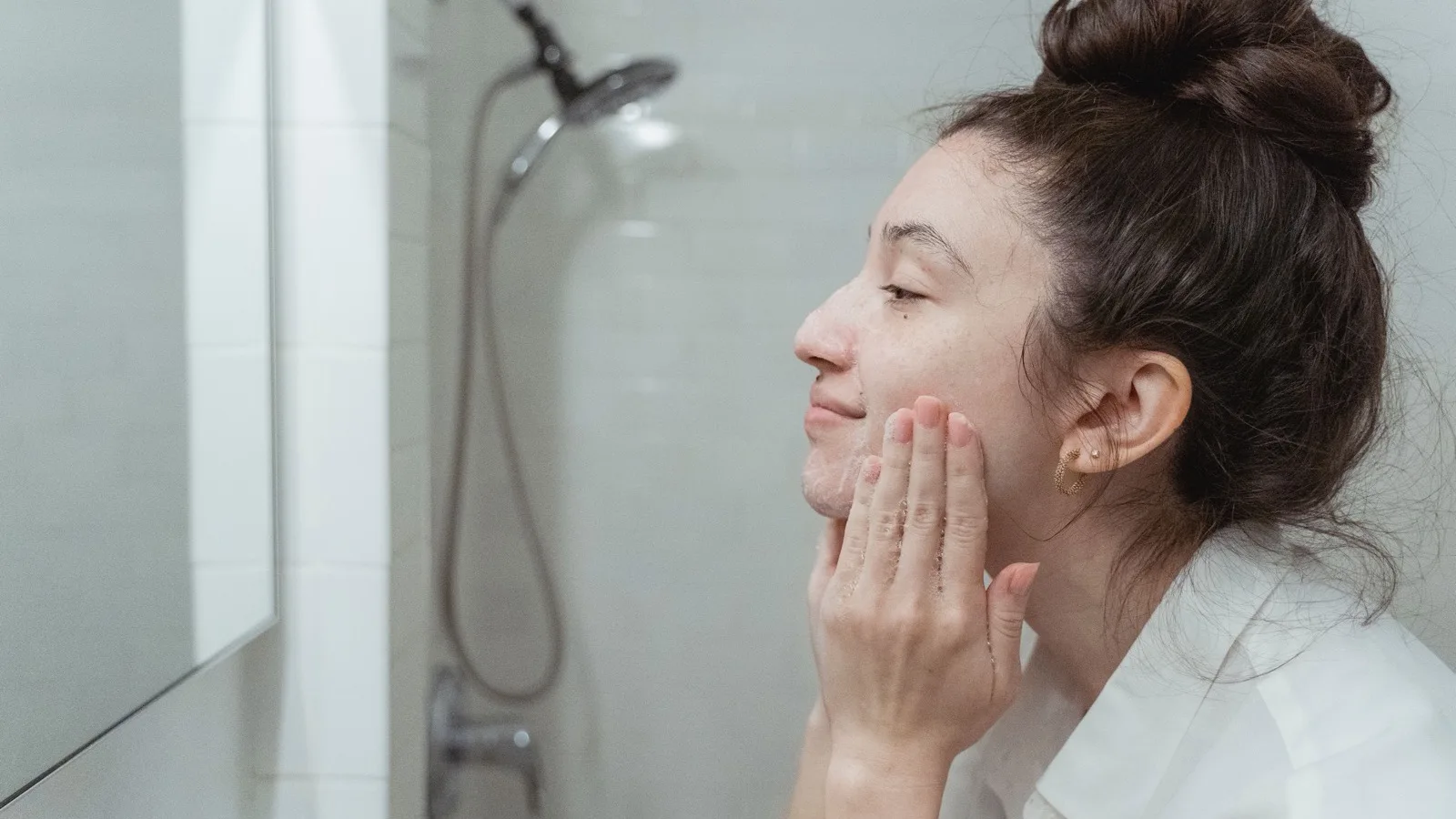
Gentle skincare is less about finding a magical ingredient and more about reducing repeated stress. Use lukewarm rather than hot water, clean hands or fingertips, and a soft towel that you press against the skin instead of rubbing. Avoid facial brushes, rough cloths, scrubs, and vigorous massage when your skin is reactive.
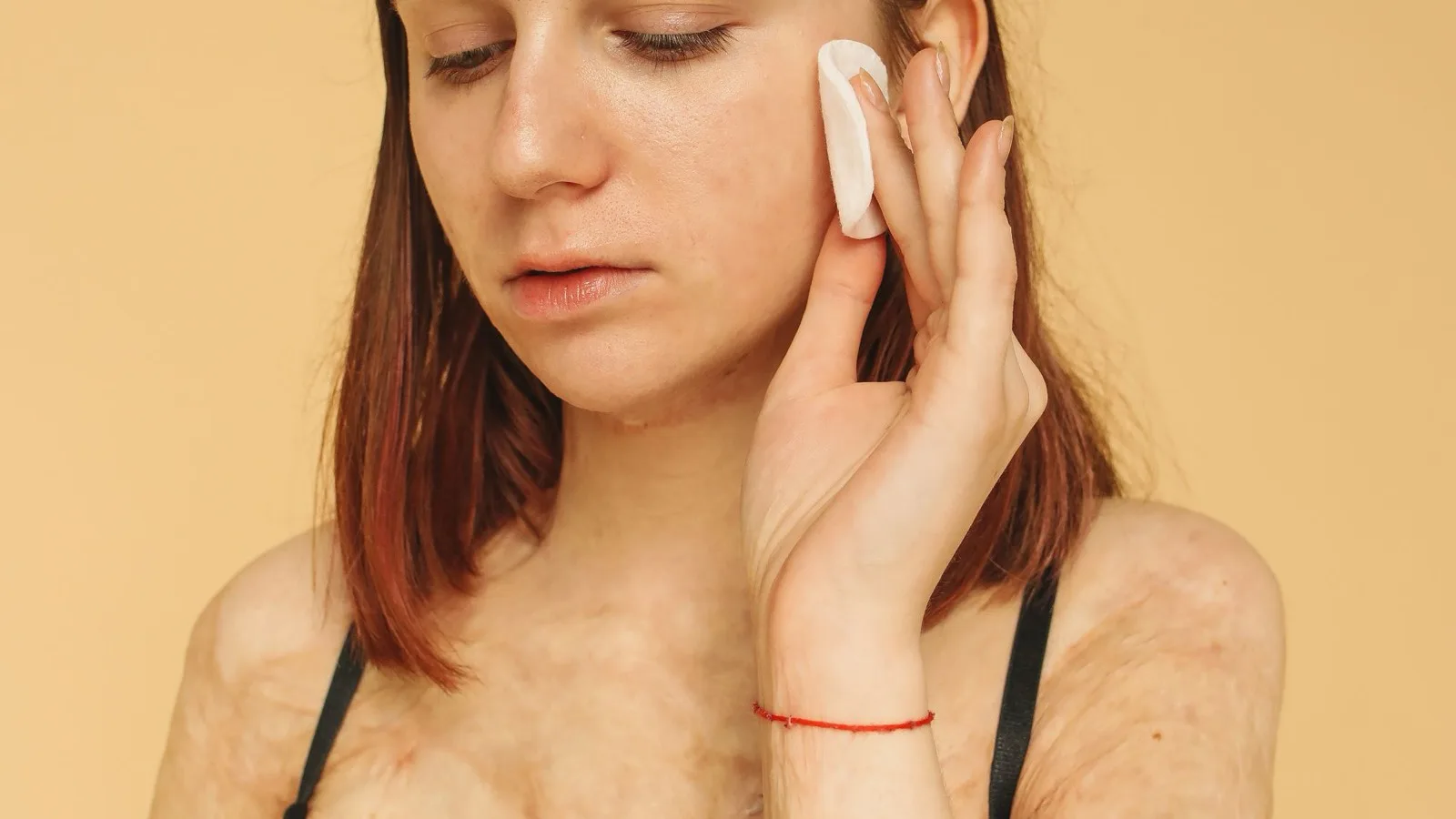
Pay attention to the whole experience. A cleanser may technically remove buildup but still be a poor fit if it leaves your face tight after every wash. A moisturizer may have a reassuring claim but still be unsuitable if it stings each time you apply it. A sunscreen may be well formulated but not useful to you if its texture makes you avoid it.
Your routine should be simple enough that you can identify what changed. If you add three products at once, a reaction becomes a guessing exercise. If you add one product while keeping everything else stable, the result is easier to interpret.
Choose products by tolerance
Start with formula and texture rather than brand reputation. Fragrance-free is usually a more useful label than unscented, because unscented products can still contain masking fragrance. The AAD identifies alcohol, camphor, fragrance, glycolic acid, lactic acid, menthol, sodium lauryl sulfate, and urea as ingredients that may irritate rosacea-prone skin.
That list should be treated as a screening tool, not a permanent universal blacklist. People differ, and the same ingredient can appear in different formulas and concentrations. Begin by reviewing ingredients that have caused a repeated reaction for you, then avoid adding several potentially irritating products during the same trial period.
Be cautious with products that combine moisturizer with a strong exfoliant, retinoid, brightening active, or heavily fragranced botanical blend. Those products may have a legitimate role for some people, but they make it harder to tell whether your basic routine is tolerable. A plain moisturizer is often a more useful baseline while you are trying to understand your skin.
Build a simple morning and evening routine
| Routine point | Simple starting step | What to adjust |
|---|---|---|
| Morning | Rinse or cleanse gently, moisturize if useful, then apply sunscreen | Choose the texture and sunscreen you can use consistently |
| Evening | Remove sunscreen or makeup, cleanse gently, and moisturize | Shorten cleansing and reduce friction if skin feels tight |
| Optional treatment | Add only one purposeful product after the basics feel stable | Reduce frequency or stop if burning persists |
If you use a prescribed topical medication, follow the instructions from your clinician or pharmacist. The National Rosacea Society’s moisturizer guidance describes applying topical medication first, allowing it to dry, and then applying moisturizer. Medication-specific instructions should take priority over a general skincare sequence.
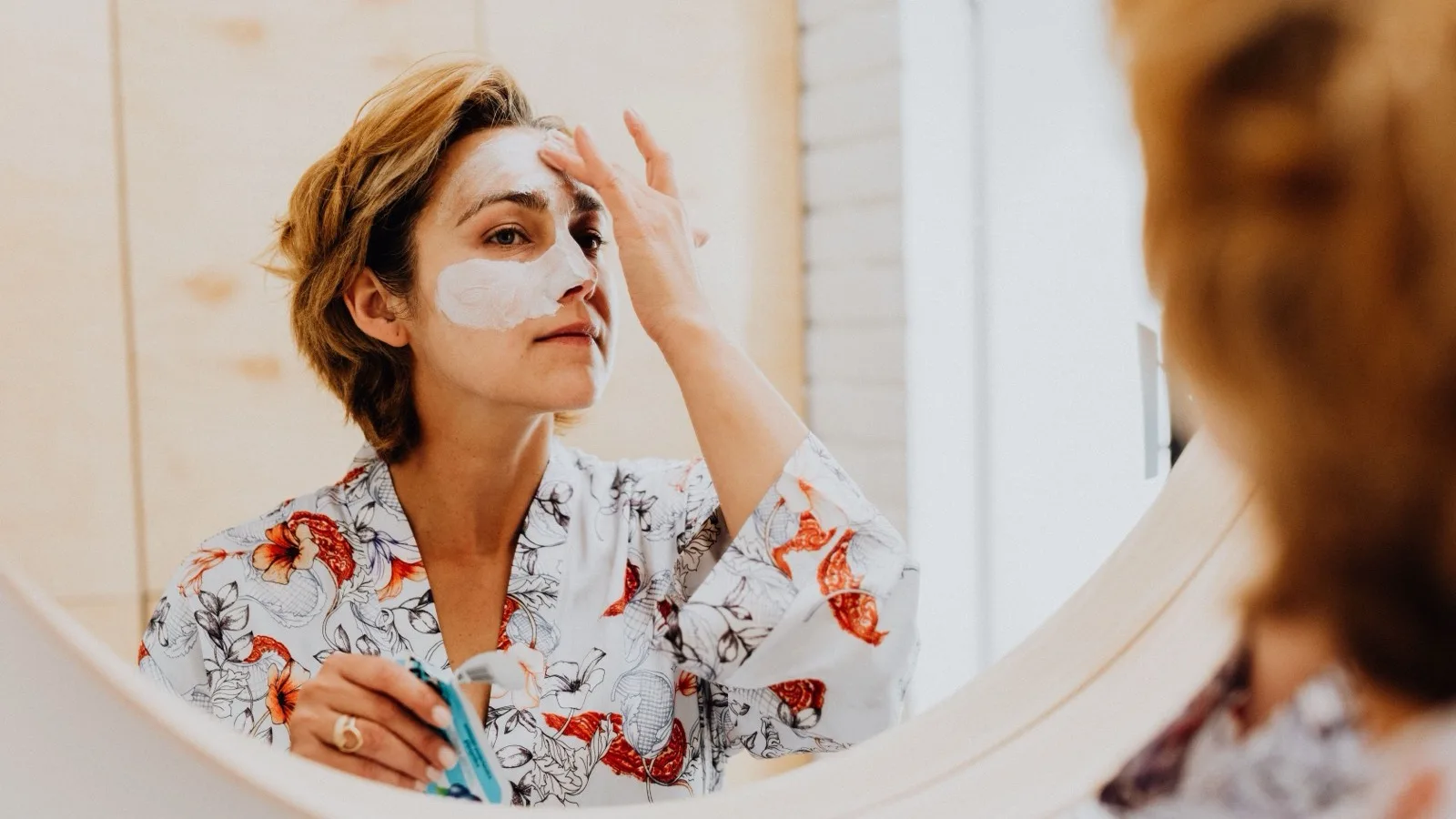
For sun protection, the AAD recommends broad-spectrum SPF 30 or higher. If sunscreen irritates your skin, it suggests looking for a fragrance-free product and considering mineral filters such as zinc oxide or titanium dioxide. Introduce sunscreen separately from other new products so you can identify what your skin is reacting to.
How to add or test a new product
Change one variable at a time. Before applying a new product over your entire face, test a small amount on a peripheral area of skin, such as the neck or another area recommended by your clinician. The National Rosacea Society recommends this kind of preliminary product testing.
Keep the amount and frequency modest at first. Note what you used, where you applied it, and what happened immediately and later that day. If the same product repeatedly causes burning, swelling, hives, or worsening redness, stop using it rather than increasing the frequency because you assume tingling means it is working.
A product diary can also reveal patterns that are easy to miss: a reaction that follows fragrance, an active used too often, hot water, shaving, a new detergent, or several changes made during the same week. The point is not to become afraid of every ingredient. It is to make the routine predictable enough that you can learn from it.
Common mistakes that make a routine harder to judge
Testing several products at once
This is the fastest way to lose the ability to identify a trigger. Keep the basic routine stable and add one change at a time.
Scrubbing away flakes or roughness
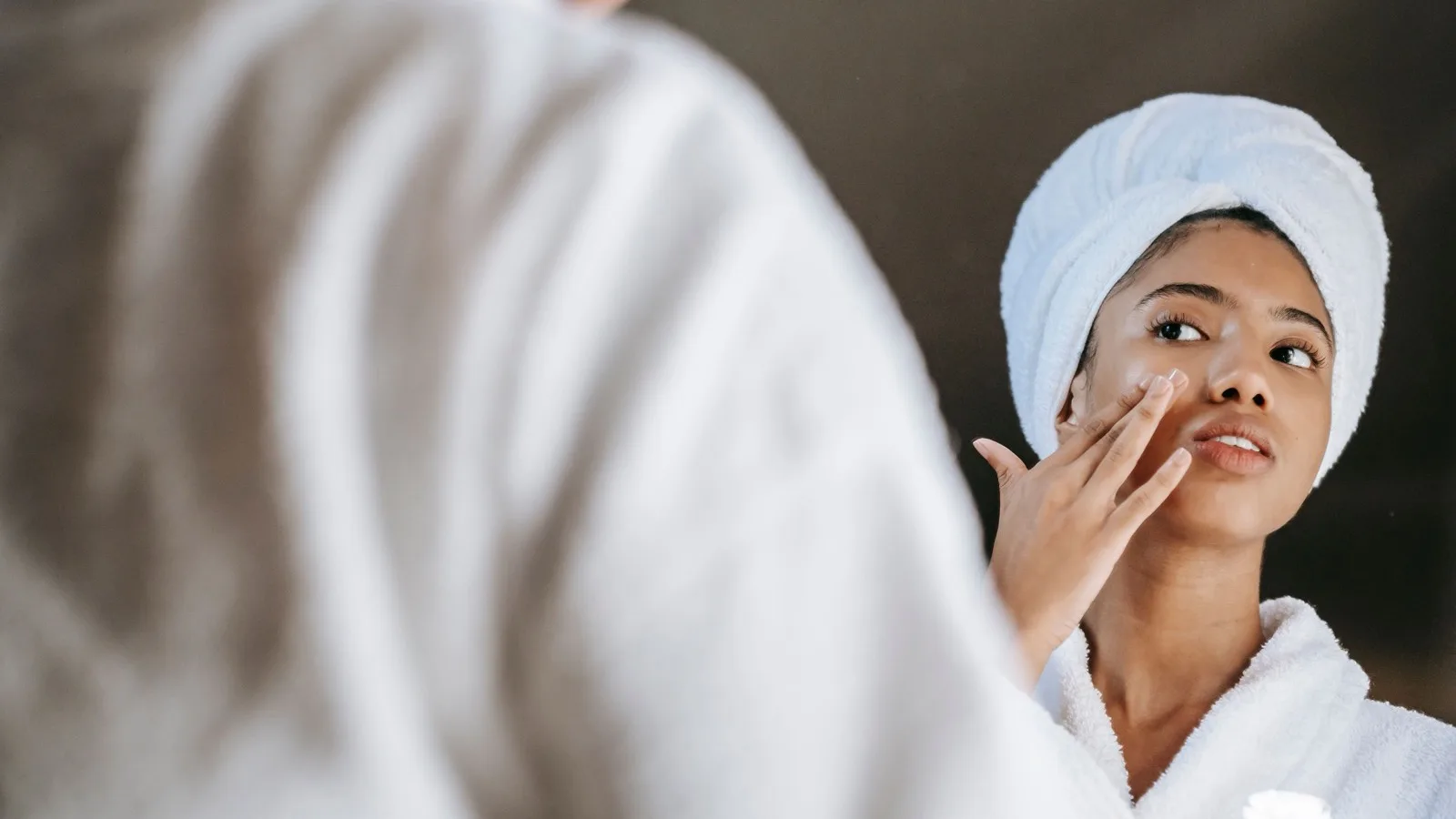
Visible flakes can be tempting to remove, but scrubbing adds friction and may leave reactive skin more uncomfortable. Try gentler cleansing and moisture support first.
Treating discomfort as proof of effectiveness
Burning, persistent stinging, or increasing warmth is not a reliable sign that a product is doing its job. Step back if discomfort continues.
Copying someone else’s routine
A routine can be popular and still be a poor match for your skin. Use other people’s routines as ideas, not as proof that every product or step belongs in yours.
When professional care matters
Skincare changes can reduce avoidable irritation, but they cannot establish a diagnosis. Seek professional advice for persistent or worsening redness, painful bumps, swelling, or eye symptoms. Professional evaluation is also useful when a simplified routine still causes repeated burning or when you are unsure whether a reaction is rosacea, allergy, irritation, or another skin condition.
The goal of a gentle routine is not to make you manage every symptom alone. It is to remove unnecessary variables while you decide whether the next step should be a product change or medical guidance.
Where to go next
For moisturizer selection, read Best Moisturizers for Rosacea-Prone Skin. If cleansing is the main source of tightness or stinging, see Best Cleansers for Rosacea-Prone Skin. For a broader explanation of product roles, read Skincare Product Categories Explained.